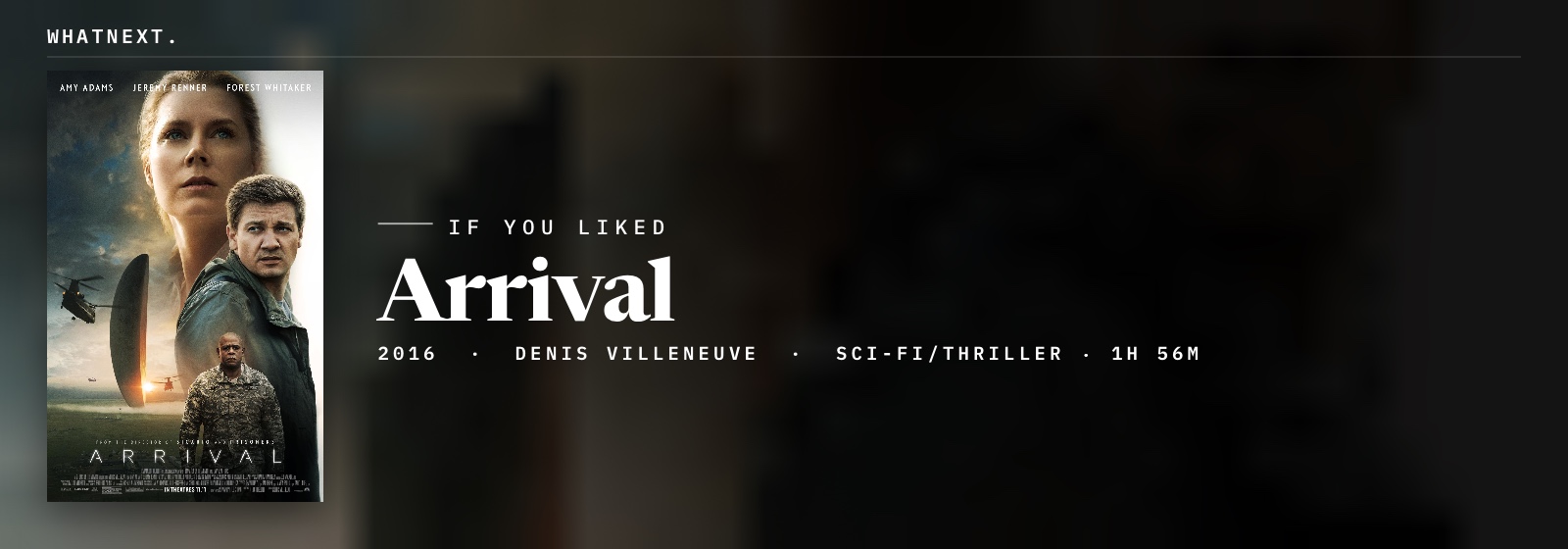
Arrival stands apart from conventional modern science fiction because it understands that the most profound frontier is not interstellar transit, but human connection. Adapted from Ted Chiang's novella "Story of Your Life," Denis Villeneuve's 2016 masterwork places a grieving linguist (Amy Adams) at the center of humanity's first extraterrestrial encounter. Instead of missiles and dogfights, the drama hinges on semagrams, linguistic relativity, and the agonizing vulnerability required to understand another mind. When Louise Banks learns to perceive time non-linearly, the film transforms from a geopolitical mystery into an overwhelming meditation on acceptance, loss, and choosing love even when you already know how much it will hurt.
WhatNext.'s recommendation engine used Arrival as a seed film, searching its catalogue for cerebral sci-fi narratives anchored in emotional gravity and philosophical inquiry. I recently posted this countdown on TikTok, counting down from the fourth-highest algorithmic match to the all-time masterpiece sitting at number one.
Here is the full countdown.
#4: Contact (1997)
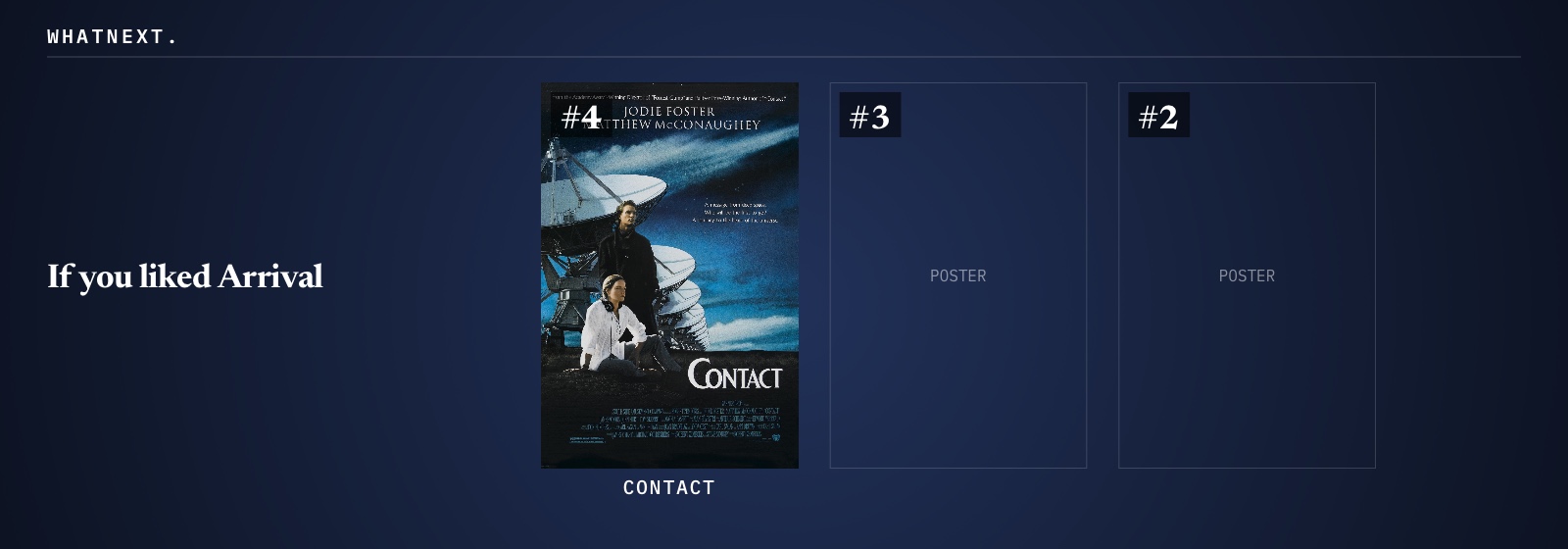
Contact is the closest spiritual cousin to Arrival in American cinema. Directed by Robert Zemeckis and adapted from Carl Sagan's novel, the film stars Jodie Foster as Dr. Ellie Arroway, a passionate astronomer who detects the first confirmed radio transmission from an intelligent civilization orbiting Vega. Like Arrival, the narrative is fascinated by the rigorous, unglamorous mechanics of real science: decoding prime numbers, parsing signal polarization, and battling political cynicism. Yet its ultimate triumph is deeply personal, illustrating how the search for extraterrestrial intelligence is really an attempt to overcome our profound cosmic isolation.
#3: Ad Astra (2019)
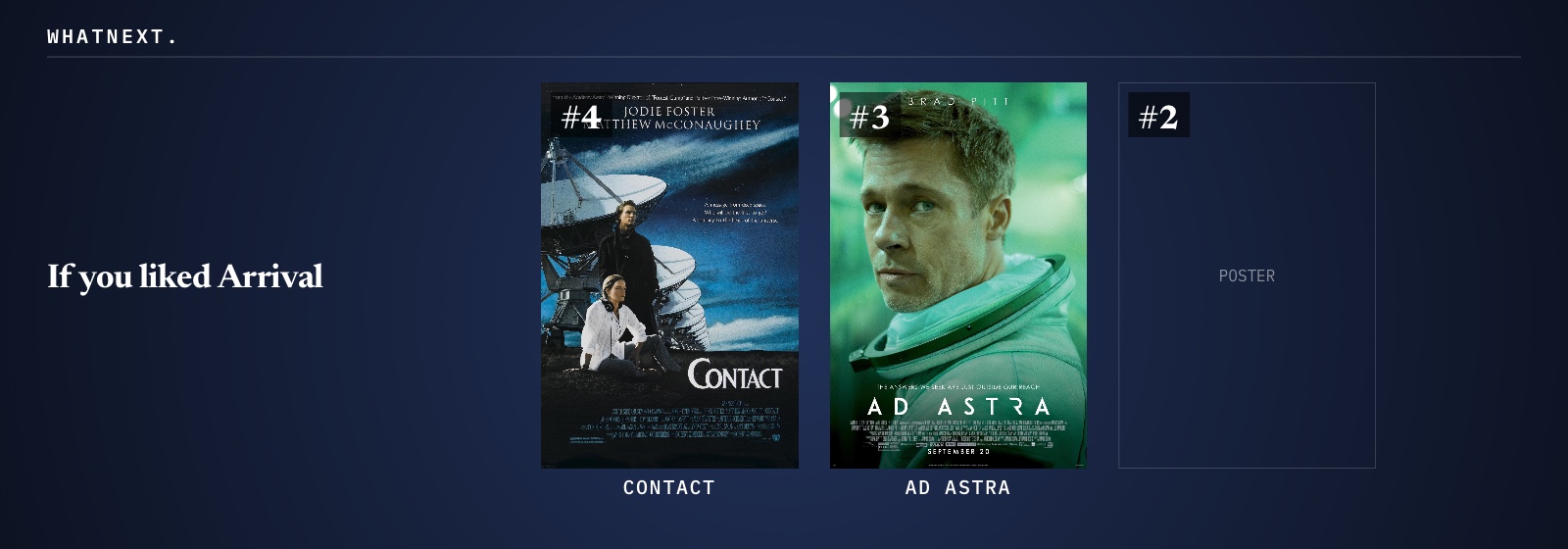
Ad Astra strips away the bombast of the standard space opera to deliver an austere, melancholic odyssey into the solar system. James Gray's 2019 film follows astronaut Roy McBride (Brad Pitt) on a classified mission to the rings of Neptune to find his estranged father, whose rogue science station threatens Earth. While visually spectacular, the film mirrors Arrival's emotional architecture: space is portrayed not as an exciting playground, but as a vast, unforgiving silence that magnifies unresolved family trauma. It is a quiet study of emotional numbness thawing under the unbearable weight of solitude.
#2: Moon (2009)
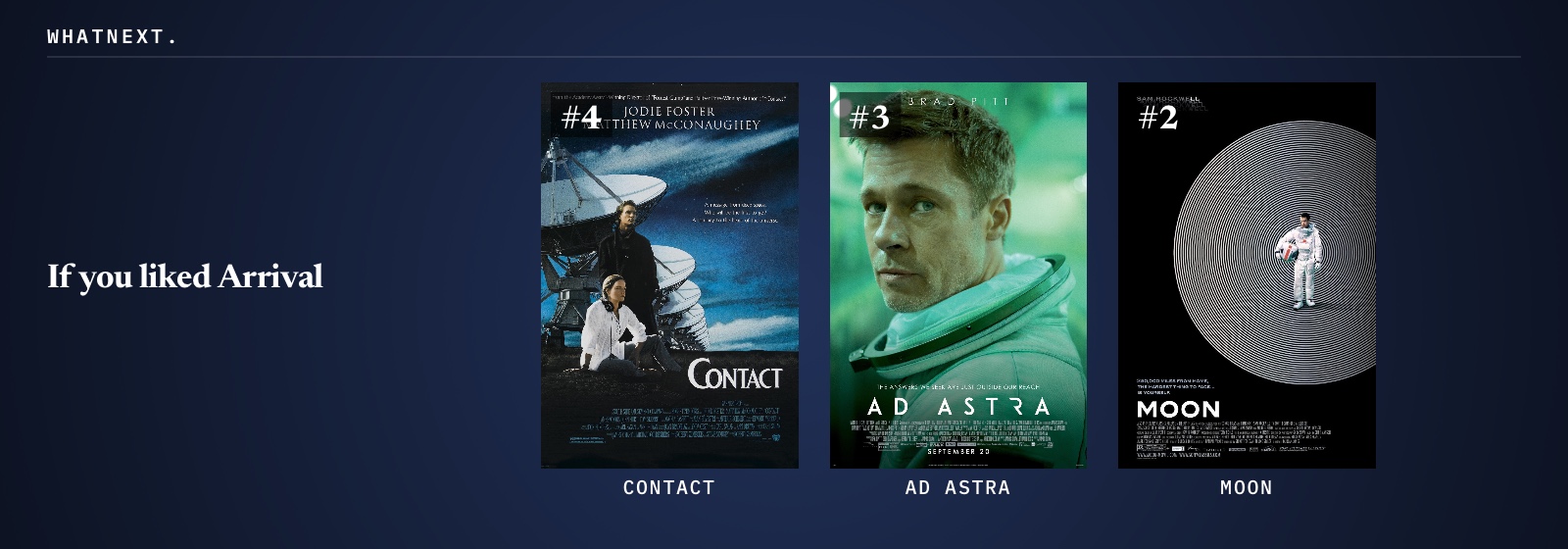
Moon achieves immense conceptual scale within the claustrophobic confines of a lunar mining outpost. Duncan Jones's feature debut stars Sam Rockwell as Sam Bell, an astronaut nearing the end of an isolated three-year shift harvesting clean energy on the far side of the moon. As his mental health frays and a routine accident uncovers a horrifying deception, the film shifts from a low-key workplace procedural into an existential mystery about identity and manufactured purpose. Like Arrival, it uses speculative premises to explore what makes a life meaningful, carried by an extraordinary, vulnerable lead performance.
#1: Solaris (1972)
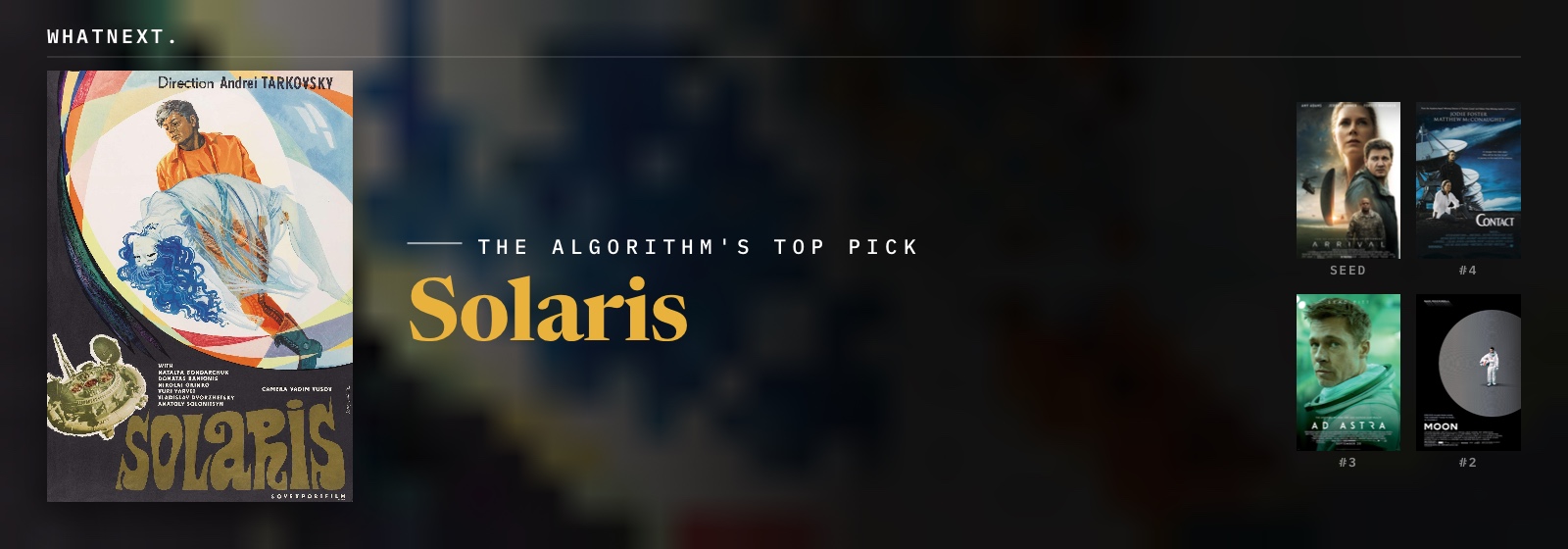
Solaris is the undisputed summit of philosophical science fiction and the algorithm's number one match for Arrival. Directed by Andrei Tarkovsky from Stanislaw Lem's classic novel, the film follows psychologist Kris Kelvin to an aging space station orbiting an oceanic planet capable of reading human subconscious thoughts. Soon, the station's crew is haunted by physical manifestations of their deepest guilts and longings; in Kelvin's case, a duplicate of his deceased wife. Where Arrival asks whether you would still embrace a relationship destined for grief, Solaris investigates whether human beings can ever truly comprehend the unknown before they make peace with the unresolved specters of their own past.
A handful of other titles scored exceptionally high in the candidate pool during the similarity run. Interstellar finished just outside the final four for its shared dedication to bridging cosmic distances through parental love. Ken Russell's Altered States and Douglas Trumbull's Brainstorm surfaced as fascinating companions exploring the outer limits of perception and sensory memory. Finally, Gattaca stood out as the algorithmic pool's top bonus pick, offering another immaculate, emotionally devastating vision of quiet human defiance.